
Ghost Jobs Are Undermining America’s Job Market: Why Millions of Job Seekers Are Losing Trust in Online Hiring
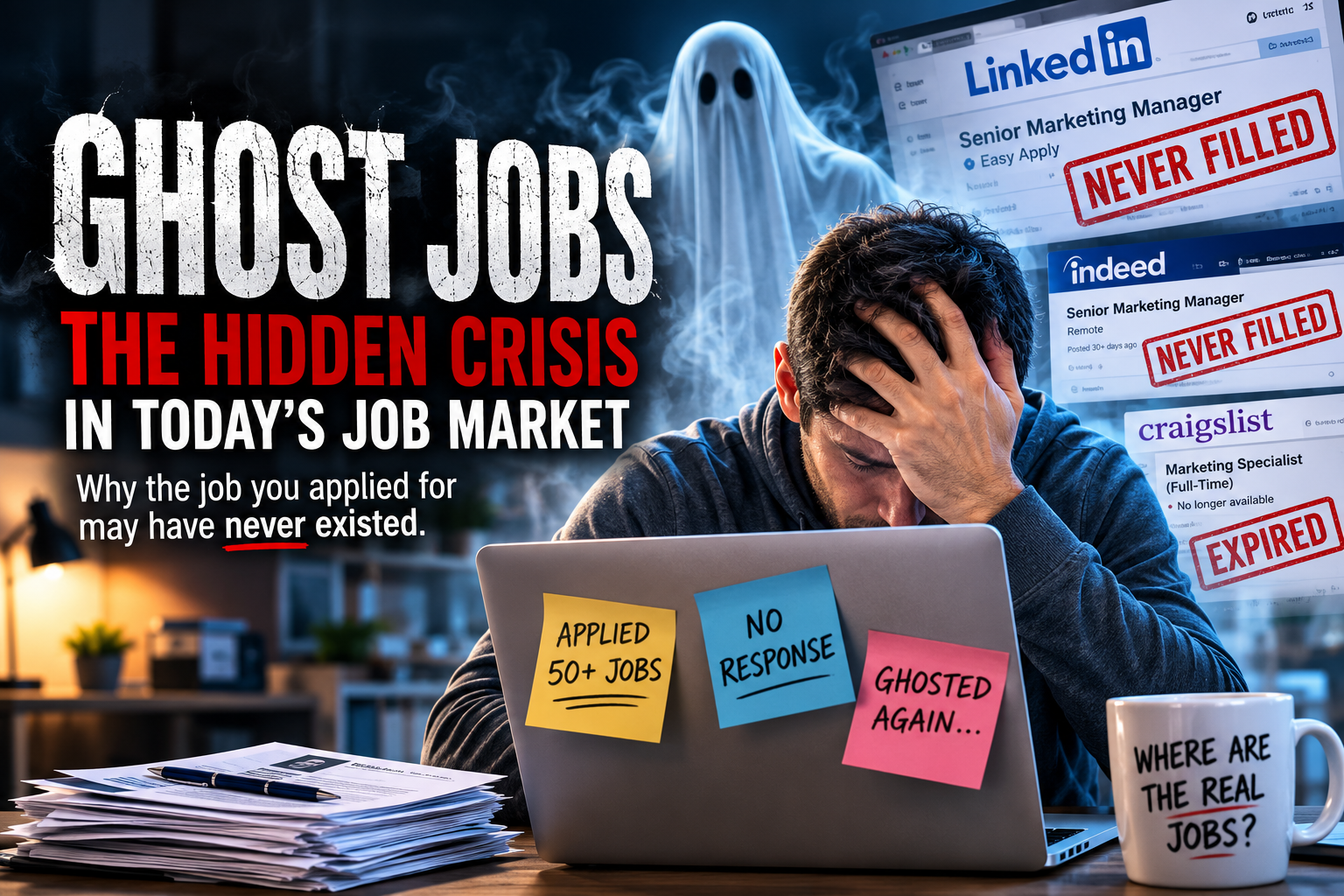
Think the job you applied for was real? Learn how ghost jobs on LinkedIn, Indeed, Craigslist, and other job boards are hurting today's job seekers.
The Job You Applied For May Never Have Existed
Imagine spending hours tailoring your resume.
You research the company.
You write a customized cover letter.
You answer screening questions.
You complete personality assessments.
You even record a one-way AI interview.
Then...
Nothing.
No rejection.
No interview.
No acknowledgment.
Weeks later, you discover the exact same job has been reposted for the fifth time.
Unfortunately, this has become a common experience for millions of job seekers across the United States.
These listings have become known as "ghost jobs"—positions that appear legitimate but are never actually intended to be filled, have already been filled internally, are posted only to collect resumes, or remain online long after hiring has stopped.
The problem has grown so widespread that it has attracted regulatory attention. Texas Attorney General Ken Paxton has announced an investigation related to LinkedIn's hiring practices and job postings, reflecting broader concerns about whether job seekers are being misled by inaccurate or deceptive listings. While LinkedIn has received significant attention, the issue extends far beyond a single platform.
Ghost jobs have been reported across nearly every major employment website, including:
- Indeed
- ZipRecruiter
- Monster
- CareerBuilder
- Craigslist
- Company career websites
- Staffing agency portals
The result is a hiring ecosystem where both employers and job seekers increasingly question whether online job postings reflect genuine opportunities.
What Exactly Is a Ghost Job?
A ghost job is generally considered a job listing that is publicly advertised but is unlikely to result in an external hire.
Not every stale listing is intentionally deceptive. Sometimes companies fail to remove postings promptly, hiring plans change, or recruiters maintain evergreen listings for future needs. However, job seekers and researchers have identified several recurring patterns that fuel the perception of "ghost jobs."
Common examples include:
- Jobs already filled internally
- Positions placed on hiring freeze
- Listings posted only to collect resumes
- Evergreen postings that remain active indefinitely
- Jobs advertised to make a company appear to be growing
- Positions posted to satisfy internal compliance requirements even when an internal candidate has already been selected
- Listings used primarily for market research on salary expectations or available talent
In each case, applicants may invest considerable time with little realistic chance of securing the role.
Why Would Companies Post Jobs They Don't Intend to Fill?
While it may seem irrational, businesses may have several motivations.
Building a Talent Pipeline
Many employers continuously collect resumes so they have candidates available if a position eventually opens.
This saves recruiting costs later but leaves applicants believing an active opportunity exists today.
Appearing to Be Growing
Growth attracts investors.
Growth attracts customers.
Growth reassures employees.
A company showing dozens of open positions can create the perception that business is booming—even if hiring activity has slowed.
Internal Hiring Requirements
Some organizations are required to publicly advertise jobs before promoting someone internally.
Applicants compete for positions that were effectively decided before the listing went live.
Market Research
Recruiters sometimes want to understand:
- salary expectations
- available skill sets
- geographic talent pools
- labor market conditions
Posting a job can generate insights without leading to a hire.
Hiring Freezes
Budget priorities can shift quickly.
A company may post jobs, freeze hiring weeks later, and simply leave listings online.
Applicants continue applying without realizing the position is no longer active.
The Hidden Cost to Job Seekers
The financial cost of applying may be minimal.
The emotional cost can be enormous.
Many professionals spend:
- 30 minutes to 2 hours customizing each application
- additional time researching companies
- completing assessments
- writing cover letters
- following up with recruiters
Multiply that by hundreds of applications.
It becomes a part-time job.
When those opportunities never existed, candidates lose far more than time.
They lose confidence.
Many begin questioning:
- Is my resume bad?
- Am I too old?
- Do I lack experience?
- Is something wrong with me?
In reality, the position itself may never have been actively available.
Ghost Jobs Are Damaging Mental Health
Job searching has always been stressful.
Today's hiring environment introduces additional frustrations:
- AI resume filters
- automated rejection emails
- video interviews with AI
- personality assessments
- multiple interview rounds
- silence after interviews
- ghost jobs
The cumulative effect can lead to burnout, anxiety, and discouragement.
Many qualified professionals describe feeling invisible despite years of experience.
The Problem Goes Beyond LinkedIn
LinkedIn often dominates headlines because of its scale, but ghost job complaints span virtually every major employment platform.
Indeed
Users frequently report applying to listings that remain active for months with no visible hiring activity.
Craigslist
Many listings appear repeatedly, while others lack clear company information or transparency regarding the employer.
ZipRecruiter
Some listings are distributed automatically across partner sites, making it difficult for applicants to determine whether a position is still current.
Company Career Pages
Even employer-operated websites may retain outdated postings due to delays in updating recruiting systems or changes in hiring priorities.
The challenge is not limited to one website. It reflects broader hiring and recruiting practices across the labor market.
Artificial Intelligence Has Made the Problem Worse
AI has dramatically reduced the effort required to post jobs.
Recruiters can now:
- generate job descriptions instantly
- repost listings automatically
- screen thousands of resumes
- rank candidates algorithmically
- automate communications
The same technology has enabled job seekers to submit hundreds of applications in a short time.
The result?
An application arms race.
Employers receive thousands of resumes.
Candidates submit hundreds of applications.
Recruiters rely even more heavily on automation.
Qualified candidates become harder to identify, and trust in the hiring process erodes.
Why Employers Should Care
Ghost jobs may seem harmless.
They aren't.
Every misleading listing damages employer reputation.
Candidates remember companies that waste their time.
Negative experiences spread quickly across:
- Glassdoor
- TikTok
- YouTube
- professional networking groups
Employer branding has become one of the most valuable recruiting assets.
Posting jobs without genuine hiring intent can undermine that brand.
The Cost to Businesses
Ghost jobs create unintended consequences.
Companies may experience:
- lower candidate trust
- declining application quality
- damaged employer reputation
- recruiter credibility issues
- increased hiring skepticism
Strong candidates increasingly question whether openings are real before investing time in an application.
How Job Seekers Can Protect Themselves
No strategy eliminates the risk entirely, but there are practical ways to reduce it.
Research the Company
Check:
- recent hiring announcements
- company news
- leadership activity
- employee growth
- funding announcements
Hiring tends to be more credible when supported by observable business activity.
Look for Fresh Postings
A listing reposted repeatedly over several months deserves closer scrutiny.
Ask whether the company has publicly indicated that hiring is ongoing for that role.
Network Before Applying
Employee referrals often provide insight into whether a position is actively being filled.
A short conversation can save hours of effort.
Apply Directly
Whenever possible:
- identify the employer
- visit the company's career page
- verify the opening
- connect with the hiring manager or recruiter
Direct confirmation can help distinguish active opportunities from outdated third-party listings.
Diversify Your Job Search
Don't rely exclusively on job boards.
Consider:
- networking
- professional associations
- local business organizations
- alumni groups
- industry conferences
- direct outreach to employers
Many positions are filled through referrals before they are widely advertised.
What Job Boards Could Do Better
Employment platforms could strengthen confidence by improving transparency.
Potential improvements include:
- displaying the last verified hiring activity
- identifying evergreen recruiting listings
- automatically removing stale postings after a defined period unless reconfirmed
- requiring employers to verify that positions remain open
- distinguishing active hiring from talent pipeline building
- publishing clearer reporting on posting accuracy
These changes would benefit both employers and applicants.
Regulators Are Beginning to Pay Attention
Public officials have started examining concerns about online job postings and recruiting transparency.
Recent investigations and public discussions signal that policymakers are taking notice of complaints from job seekers who believe they have invested significant time pursuing opportunities that were never genuinely available.
Regardless of the outcome of any individual investigation, the broader conversation highlights growing demand for greater transparency and accountability in online recruiting.
The Hiring Process Needs More Honesty
Technology has made applying easier than ever.
Ironically, it has also made hiring feel more impersonal than ever.
Applicants deserve to know:
- Is the job actually open?
- Is the company actively interviewing?
- Is there funding for the position?
- Is an external hire genuinely being considered?
These are reasonable expectations.
Transparency benefits everyone.
Employers receive more engaged applicants.
Candidates spend their time pursuing real opportunities.
Recruiters build stronger relationships with prospective employees.
A Personal Perspective
Like many professionals, I've spent countless hours searching job boards, tailoring resumes, writing customized cover letters, and completing lengthy applications—only to hear nothing in return.
I've watched the same positions reappear week after week.
I've completed assessments for roles that seemingly vanished.
I've encountered AI-driven screening processes that felt detached from the human side of hiring.
I'm not alone.
Millions of Americans share similar stories.
The frustration isn't simply about rejection. Rejection is part of any competitive job search.
The frustration comes from uncertainty—never knowing whether an opportunity was real to begin with.
When job seekers invest significant time and energy, they deserve an honest process.
The Bottom Line
Ghost jobs are more than an internet annoyance.
They represent a growing trust problem in today's labor market.
While not every outdated or unfilled listing is intentionally deceptive, greater transparency from employers, recruiters, and job platforms would help restore confidence in online hiring.
If organizations truly value talent, they should value candidates' time as well.
A job posting should represent a genuine opportunity—not simply a marketing tool, a resume collection exercise, or an artifact of an outdated hiring process.
The hiring process works best when it is built on honesty, communication, and mutual respect.
Until those principles become the norm, job seekers will continue asking the same question every time they click Apply:
"Is this job actually real?"
References
LinkedIn. (2026). The job you applied for never existed? https://www.linkedin.com/pulse/job-you-applied-never-existed-william-rochelle-any1e/
Texas Attorney General. (2026). Public statements regarding investigation into LinkedIn hiring and job posting practices. (Readers should consult the Attorney General's official website for the latest updates and findings.)